
You told yourself you wouldn't yell today. It's 7:32am.
Get through the meltdown without losing it too.
96 cards for your child's biggest feelings — and one line on every single card for you, for the moment you're the one who can't breathe.
Pick a card, say the line, do the sixty-second thing. You can use it tonight.
Tap to turn it over
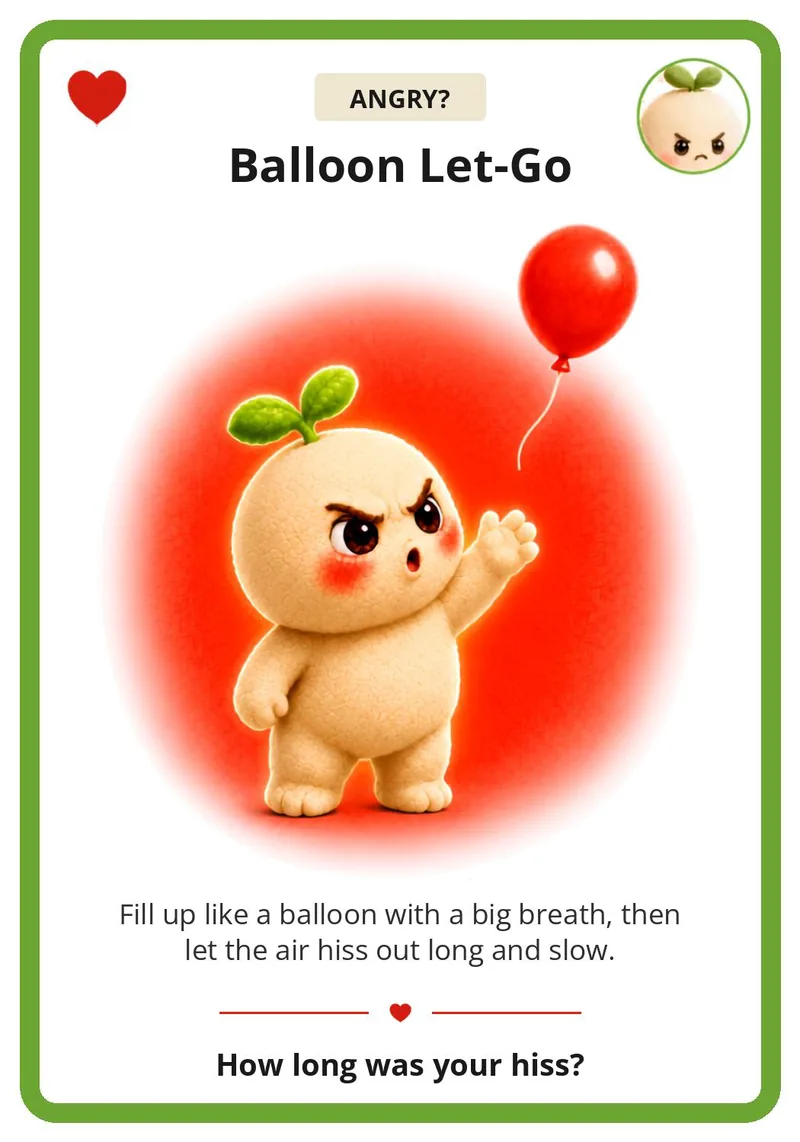
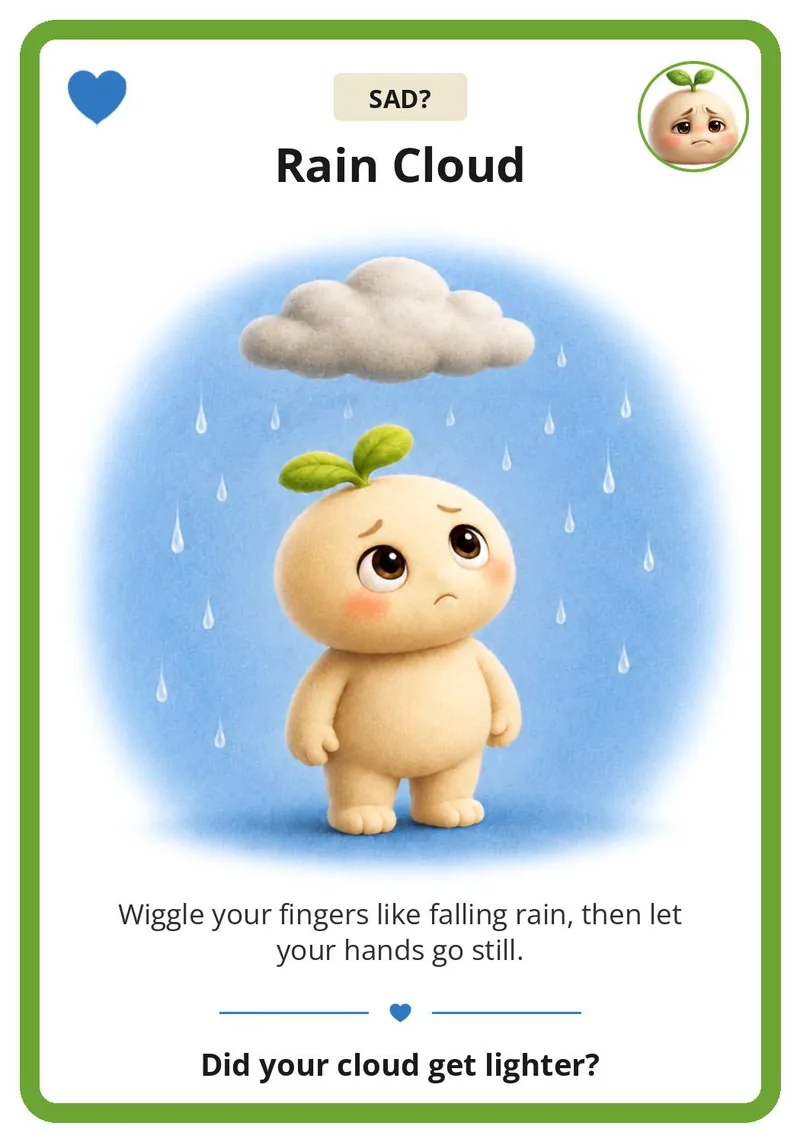
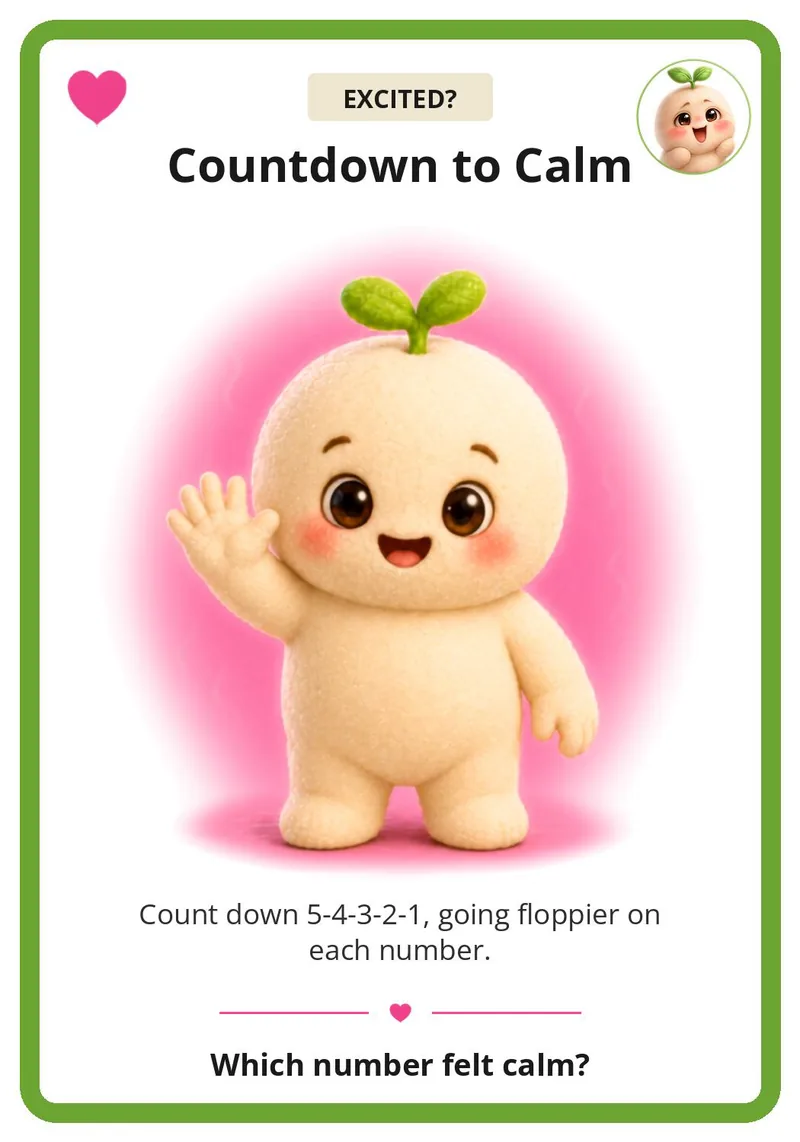
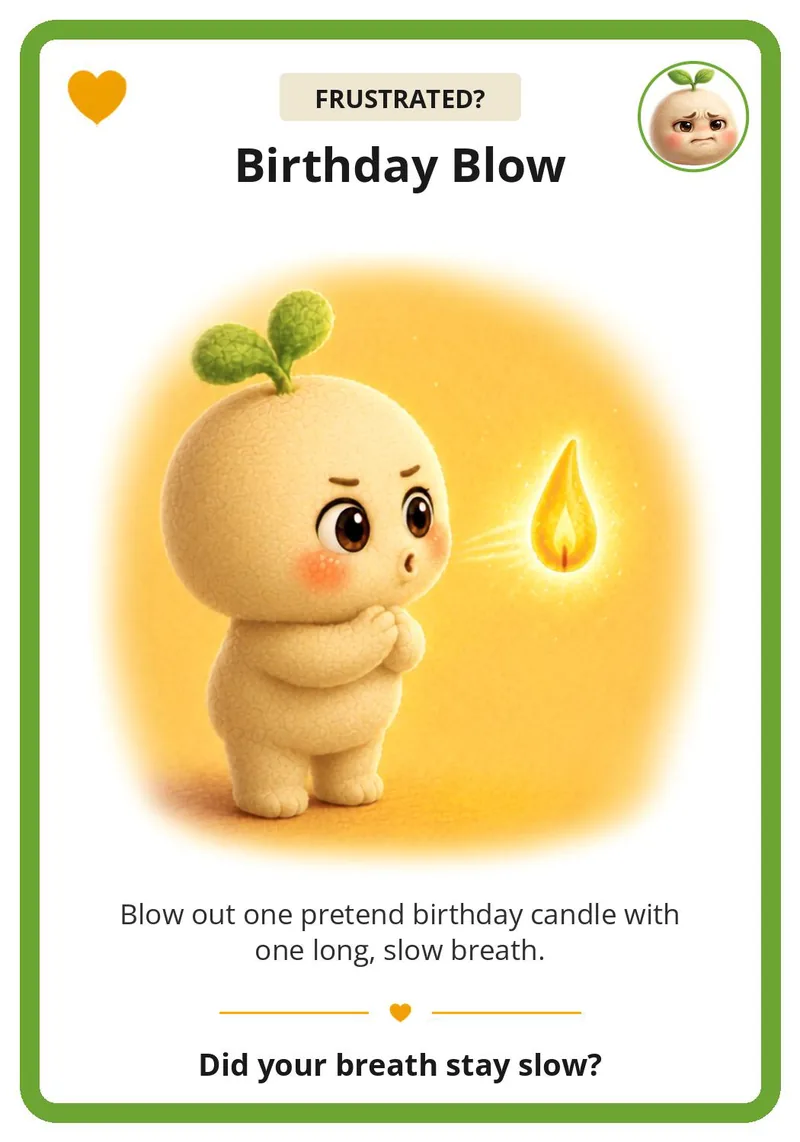
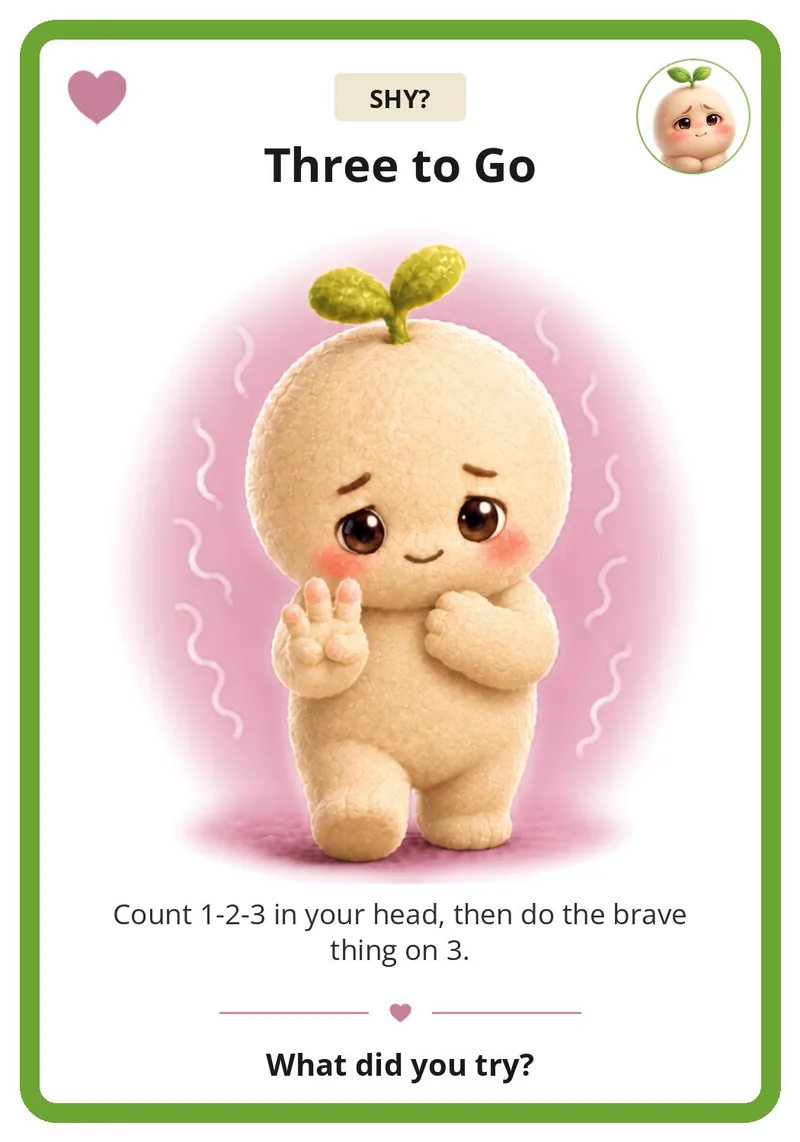
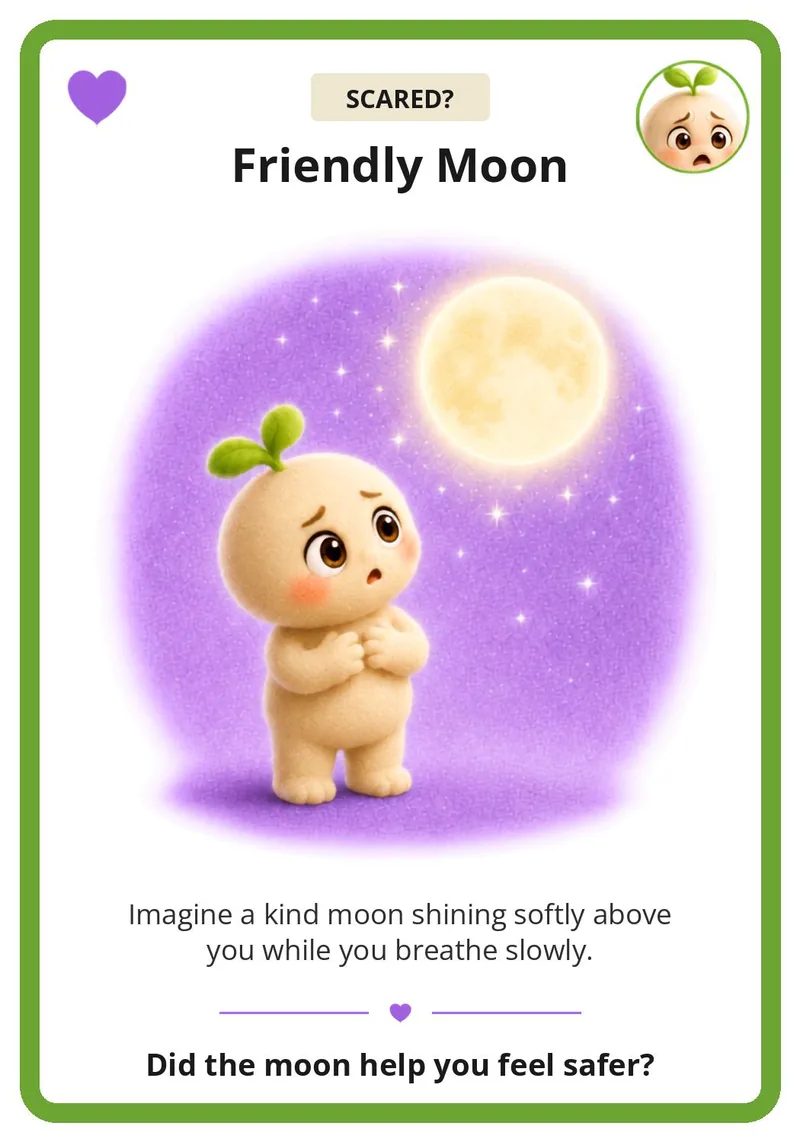
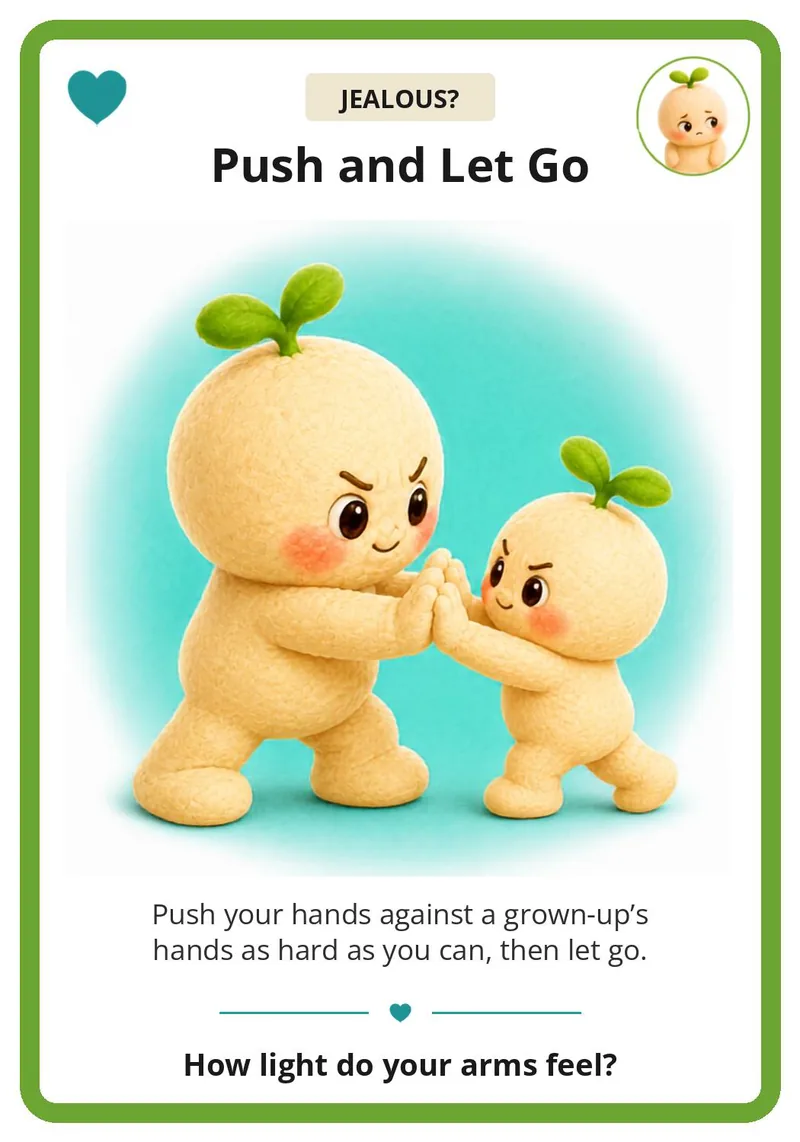
This is the whole product. It takes three minutes.
6:41pm — She won't put her pyjamas on. You can hear your own voice getting sharp and you know exactly where this is going.
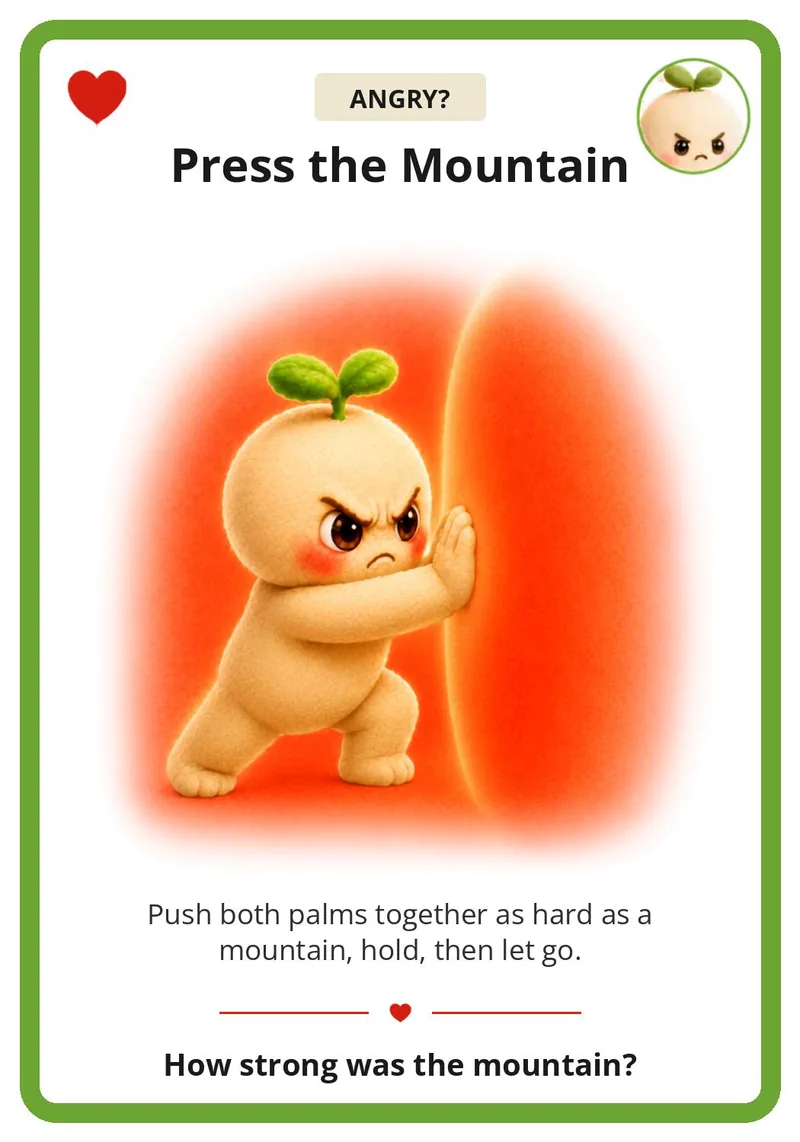
You pick a card. Press the Mountain.
Before anything else, the card tells you what to do with yourself: "Press your own palms discreetly; same effect." Five seconds, arms at your sides. Nobody in the room knows you did it.
Then you read the front out loud: "Push both palms together as hard as a mountain, hold, then let go." You didn't have to think of it. At 6:41pm that matters more than it sounds like it should.
She pushes. You push with her. Then you both let go at once — the card is specific about that part.
6:43pm — She asks the question printed at the bottom of the card: how strong was the mountain? The pyjamas happen afterwards.
Nothing in that needed floor space, quiet, or a room of your own. It works in a supermarket queue and in the back of a car.
Pick. Say. Do. That's the whole method, and it's identical on all 96 cards.
Instant download90-day guaranteeSecure checkout
You don't need to be calm. You need to be slightly slower than them.
Serenity at 7:32am with a screaming four-year-old isn't available, and chasing it is how parents end up feeling like failures twice over — once for the meltdown, once for not floating above it.
The goal is to be a little slower, a little lower, a little longer in the out-breath than the person in front of you. That gap takes about three seconds to create, and it's enough to give them something to sync to.
Every card is built around that, which is why the deck assumes you might be at your limit rather than assuming you're not.
Slower than them. Not calm. Slower.
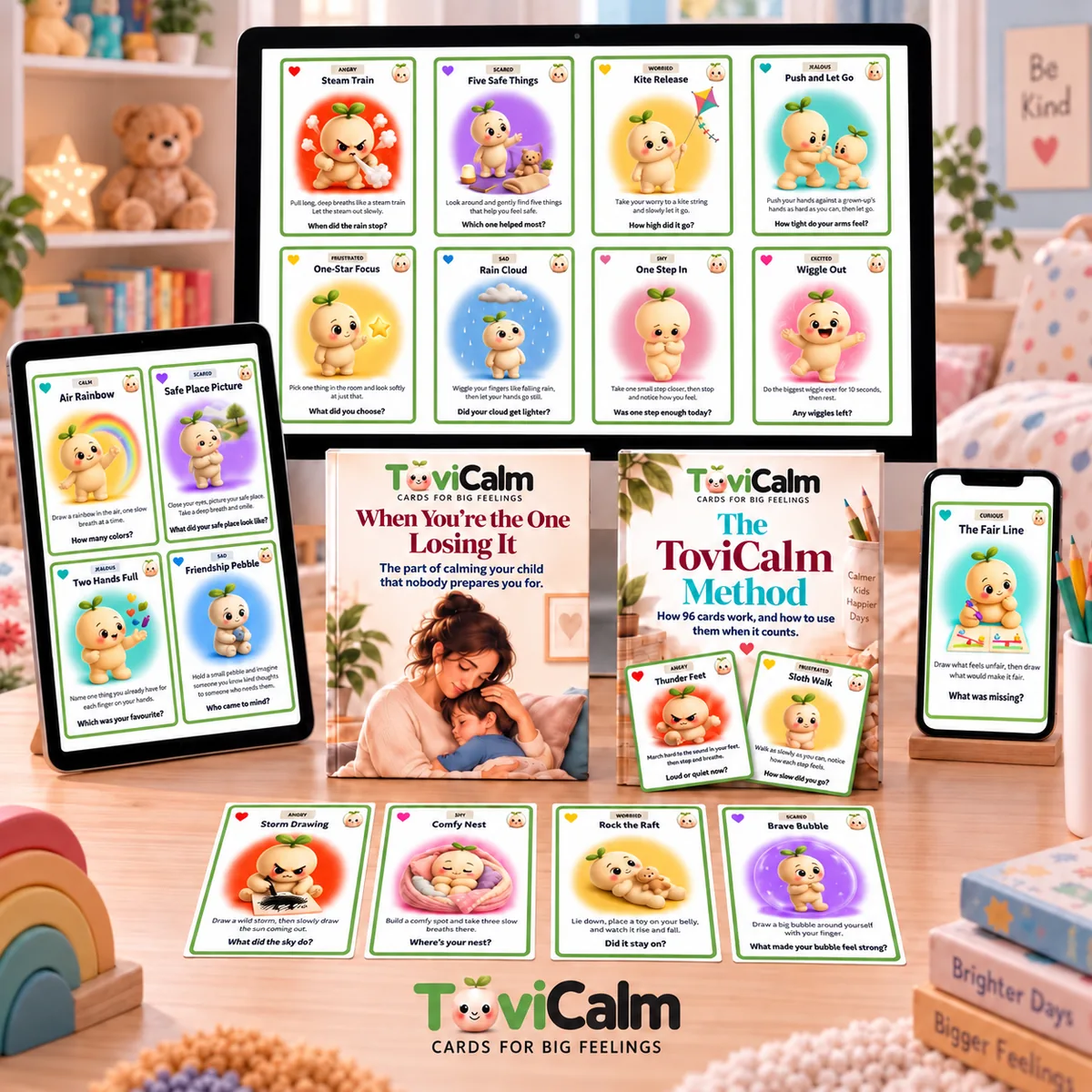
The complete ToviCalm deck
US$29.95
US$59.90
- 96 cards, 8 emotions — shyness and jealousy included
- Two sides to every card — a technique in front, four boxes behind
- One of those boxes is written for you — on all 96
- Body first — no card asks a child to only imagine
- When You're the One Losing It — a whole guide for the parent, not the child
- The ToviCalm Method — why reasoning fails mid-meltdown, and what works
- 3 print formats — plus it works straight from your phone
- Instant download, no subscription — reprint it forever, for as many children as you have
Both guides are included. There's nothing to unlock and nothing else to buy.
Instant download90-day guaranteeSecure checkout
Three pieces of what's actually inside.
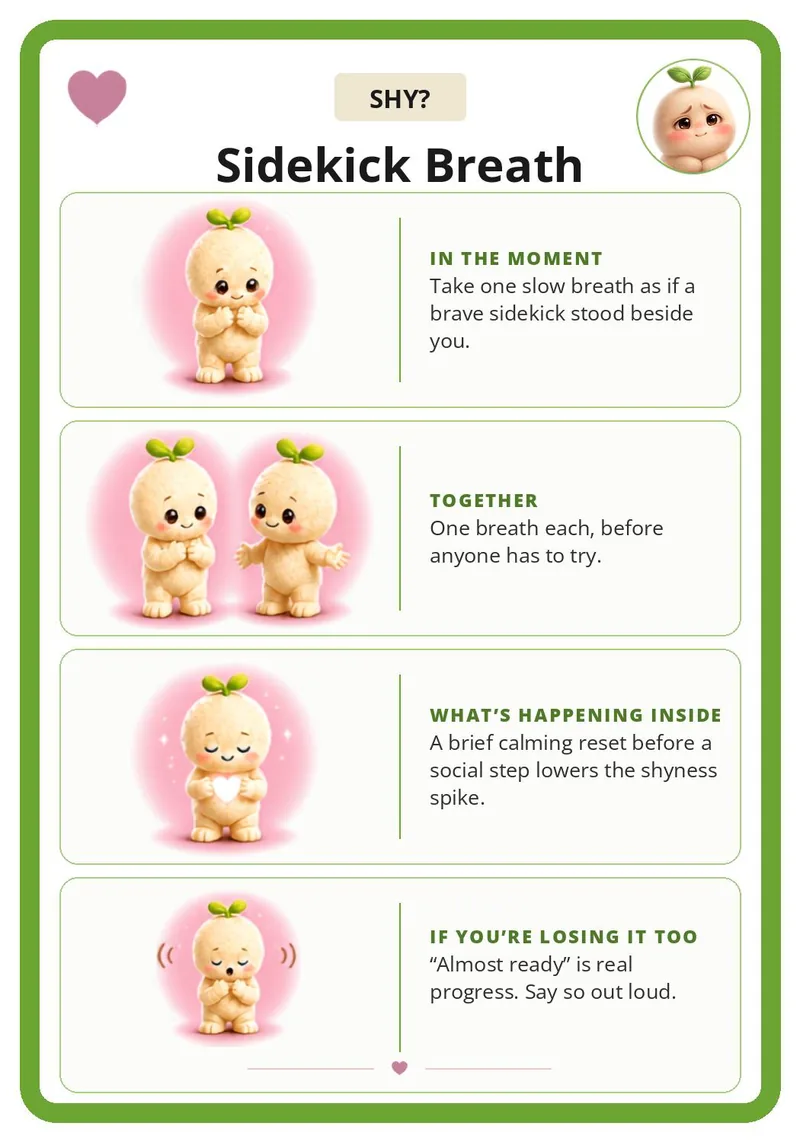
One card
The thing you reach for in the middle of it
One technique, one line to say, sixty seconds. Short enough to read while a four-year-old is screaming, which is the only test that matters.
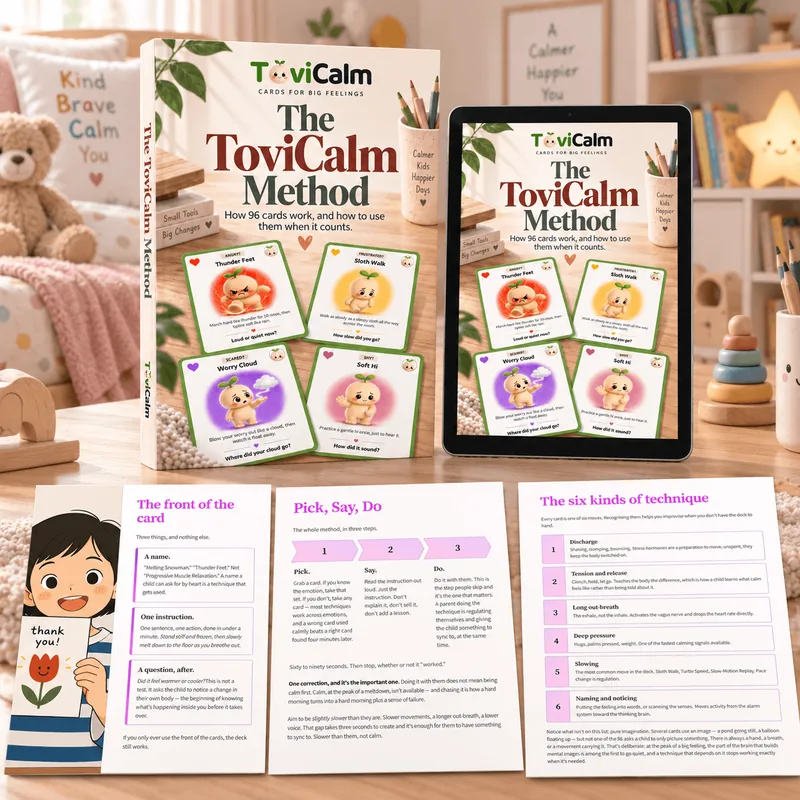
The ToviCalm Method — included
Why reasoning stops working, and what still does
Fifteen minutes that make the deck worth more for years. Why consequences don't land mid-meltdown. The six kinds of technique behind all 96 cards, so you can improvise when the deck isn't in the room. And the five rules for making it stick at home — including the one most people get wrong, which is introducing the cards on a good day instead of during a crisis.
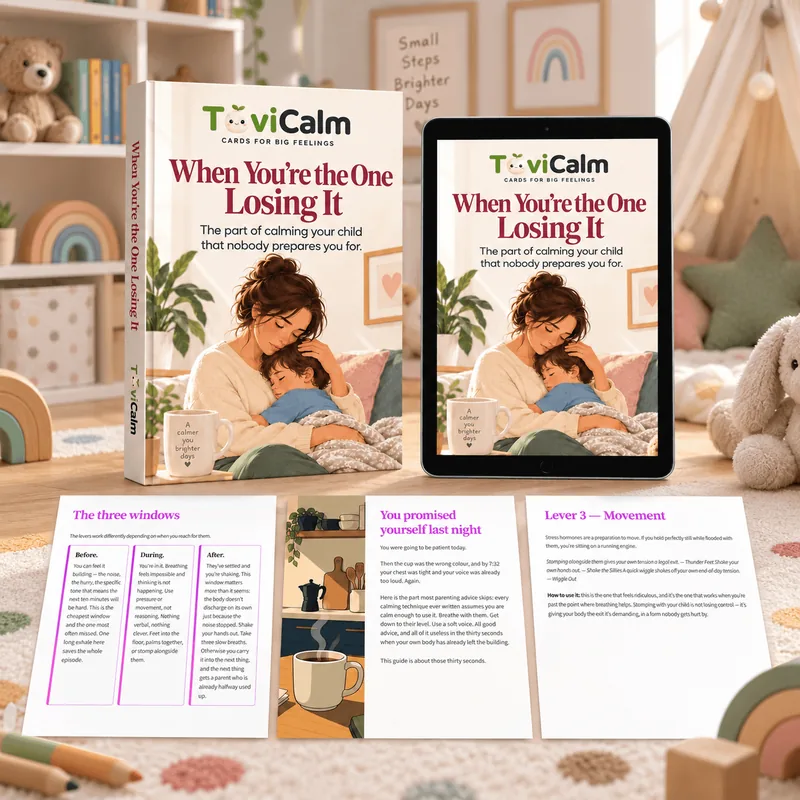
When You're the One Losing It — included
The part written for you
Five physical levers — exhale, pressure, movement, voice, time — that work in seconds and that nobody in the room can see you use. What to do in the ten minutes after you've already yelled, which matters more than the yelling did. And the days you have nothing left, which are also covered.
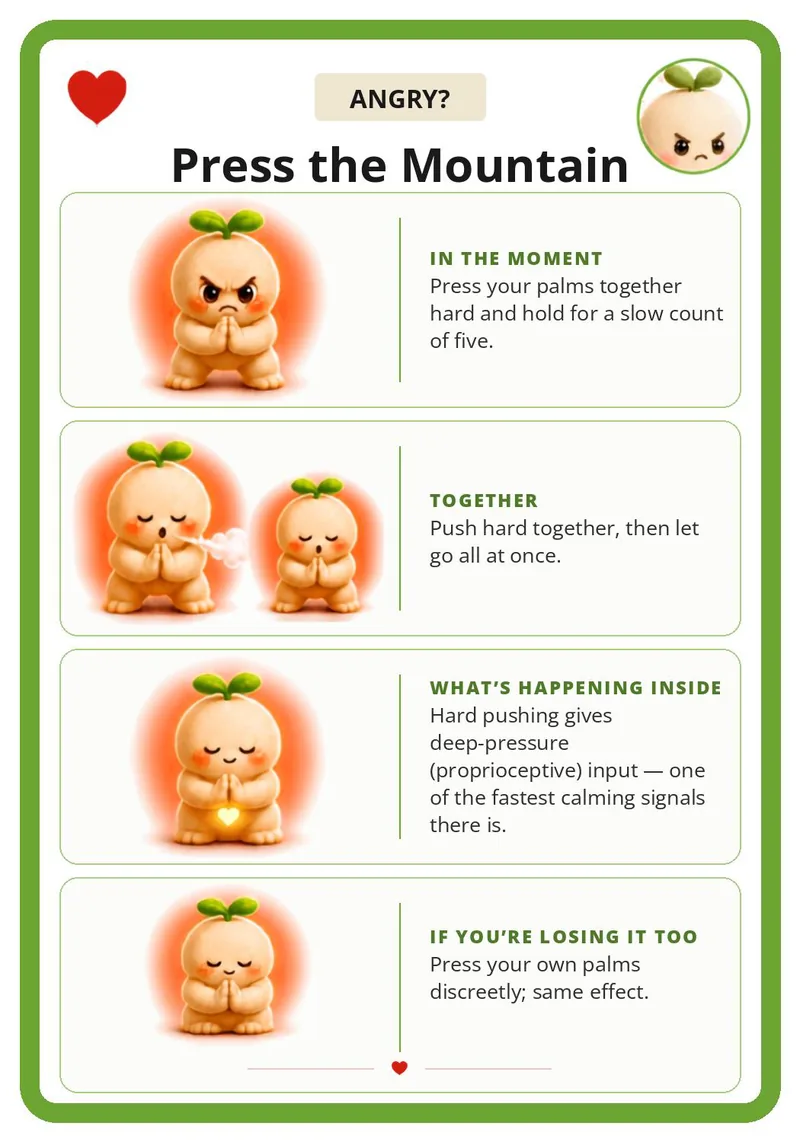
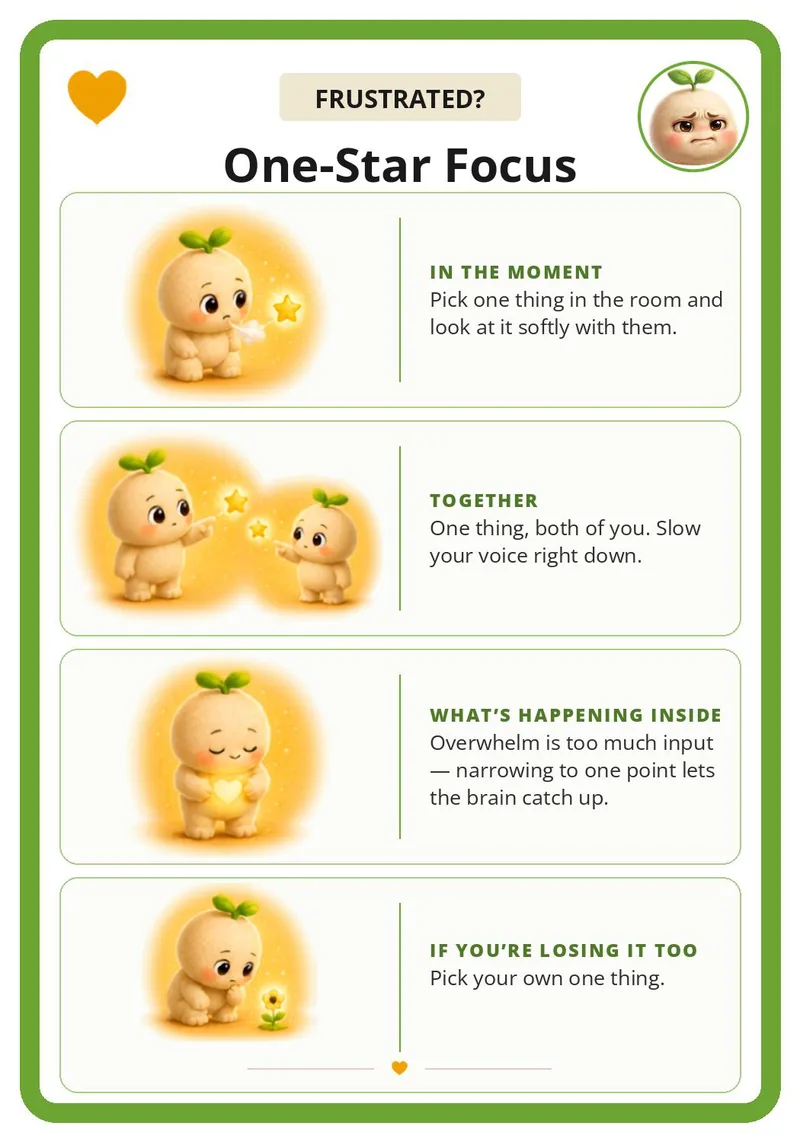
The same card, and everything on the back of it.
In the Moment — what your child does, right now.
"Press your palms together hard and hold for a slow count of five."
Together — what you do beside them, so they're not doing it alone.
"Push hard together, then let go all at once."
What's Happening Inside — one line so you know what you're looking at.
"Hard pushing gives deep-pressure (proprioceptive) input — one of the fastest calming signals there is."
If You're Losing It Too — one line for you, when you're the one at your limit.
"Press your own palms discreetly; same effect."
"Press your own palms discreetly; same effect."
There's a line like that on all 96 cards. The hard part usually isn't the child.
The front of every card holds the emotion, one technique, one instruction, and one question to ask each other afterwards. That's it — as much as a person can read while a four-year-old is screaming. Everything else waits on the back.
No card asks a child to imagine anything. Every one starts with something physical — hands, breath, feet, pressure, temperature, rhythm — because during a meltdown a child can copy a movement long before they can follow a sentence.
0 of 96 cards are visualisation-only.
Look at the cards before you buy them.
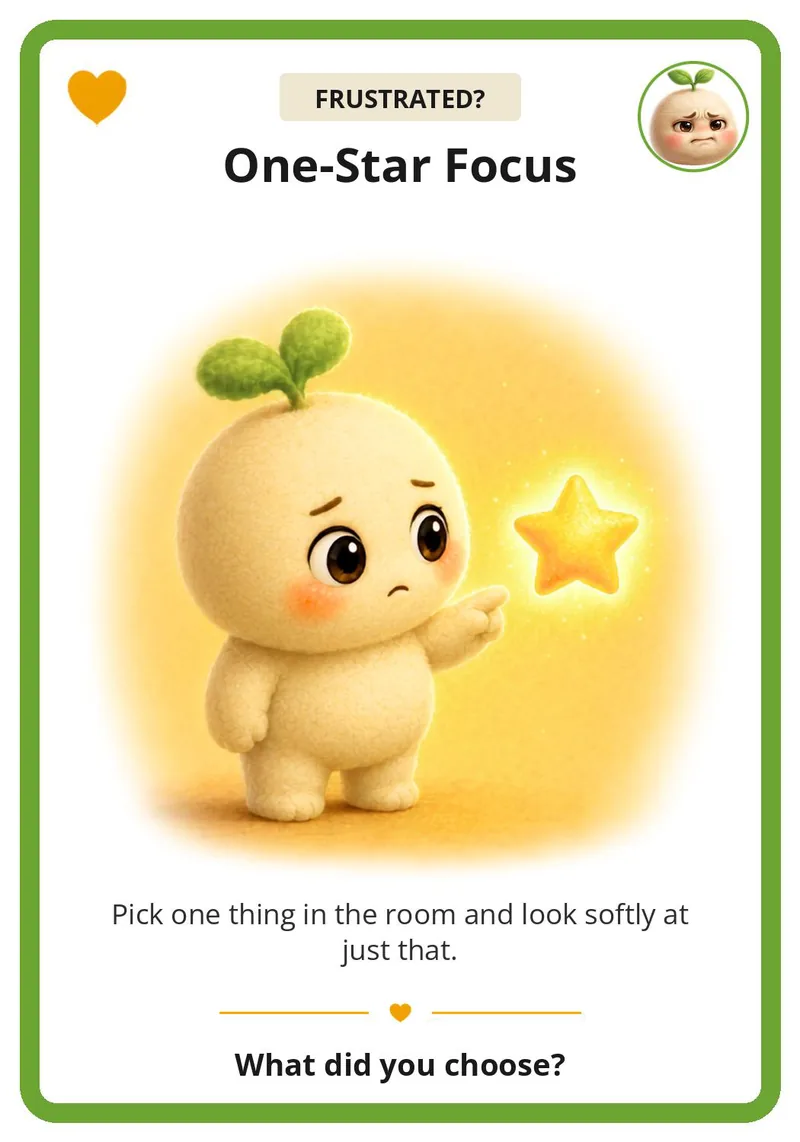
12 cards in this set
Frustrated — the near-miss feeling: wanting something you can't do yet.
Frustration is what happens when a child can almost do something, but not yet.
Instant download90-day guaranteeSecure checkout
It works where meltdowns actually happen — and for the children who can't follow a sentence.
- 87 of 96 need no room to move
- Car, supermarket queue, restaurant table.
- 75 of 96 need no speech at all
- Which is why it works as-is for ADHD and autistic children. No separate edition, nothing extra to buy.
- 67 of 96 work with a group sitting down
- Siblings, classroom, birthday party.
Keep it on your phone or print it. Three layouts: single cards, four to an A4 sheet with crop marks, and double-sided sheets for duplex printers. Fridge, glovebox, handbag, classroom wall.
Who it's for, and who it isn't.
It's for you if
- your child is roughly 3 to 10
- you want something for the moment itself, not a programme to work through
- you'd rather have a card in your pocket than another app on your phone
- your child does better with movement than with explanations
It's not for you if
- you're looking for a behaviour chart or a reward system
- you want a physical boxed deck posted to you — this is a file you print or use on your phone
- you're hoping for one conversation that ends the meltdowns
It isn't therapy and it isn't a substitute for it. If your child's distress is constant, escalating, or frightening you, that's a conversation for a professional, and taking it there isn't a failure of this or any deck.
It also isn't a promise that meltdowns will stop. They won't. What changes is that you both have something to do while one is happening, instead of waiting for it to end.
What parents say after using the deck.
4.9 based on 28,839 verified reviews
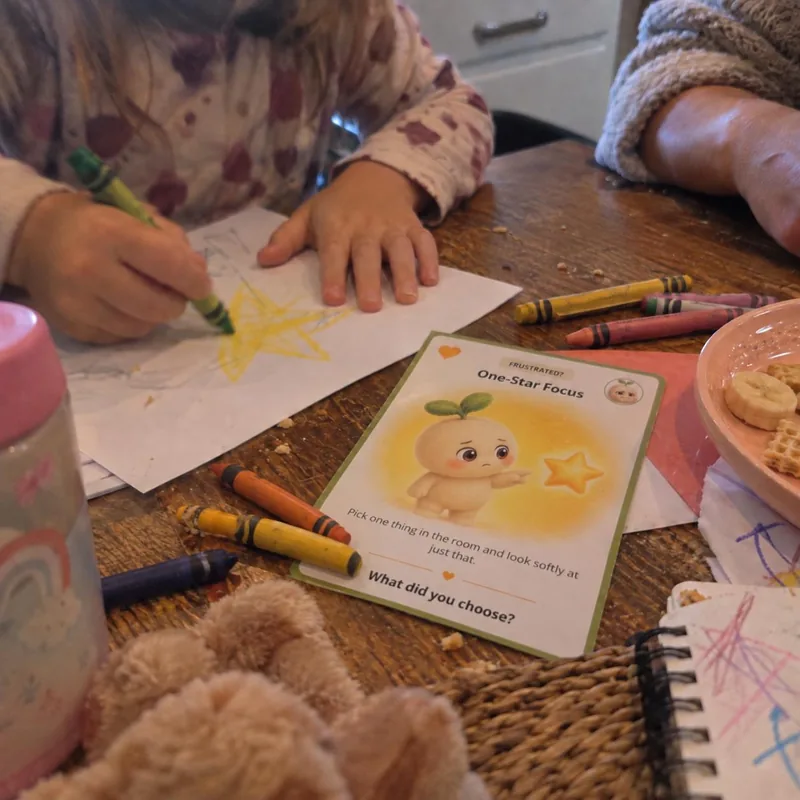
“What I like most is how little explaining is needed. When my daughter is already upset, long conversations usually make things worse. With these cards I can just pick one, show her what to do, and join in. We already have a few favorites that she recognizes immediately.”
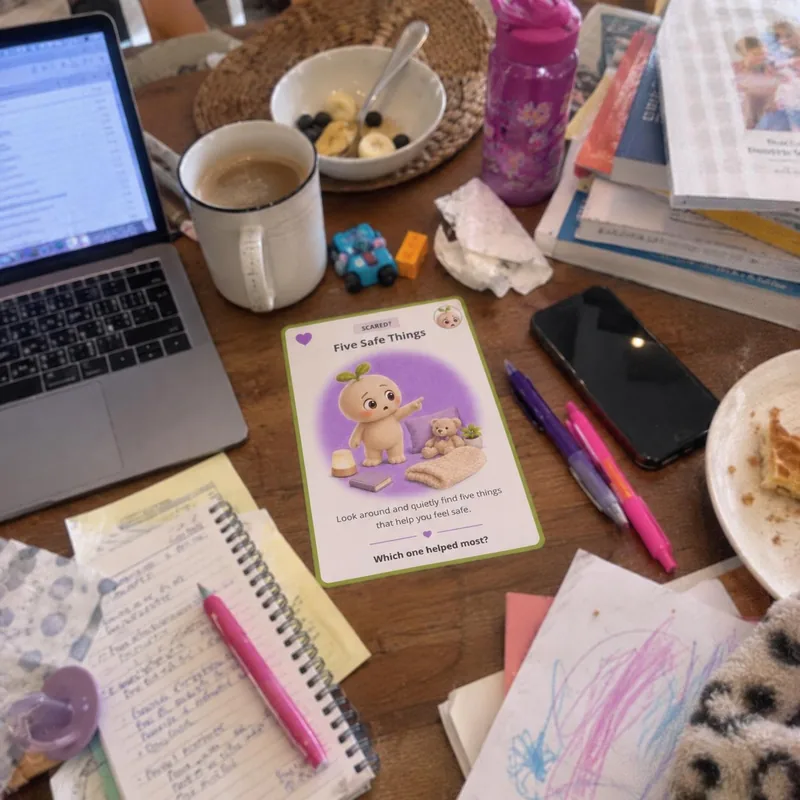
“I bought ToviCalm because our after-school hours were becoming exhausting. My youngest would come home tired, hungry, and ready to melt down over anything. The cards give us a simple way to reset before homework or dinner. We don't use them every day, but when we do, they really help change the tone.”
“I watch my granddaughter twice a week and sometimes I struggle to know what to say when she gets overwhelmed. These cards are very easy for me to understand and use. I like that I don't have to remember a whole technique. We choose one together and do it right there.”
“I appreciate how practical the activities are. They are short enough to use during transitions without turning the whole moment into a lesson. I've adapted several of the ideas for my classroom and the children respond well because they are doing something instead of just being told to calm down.”
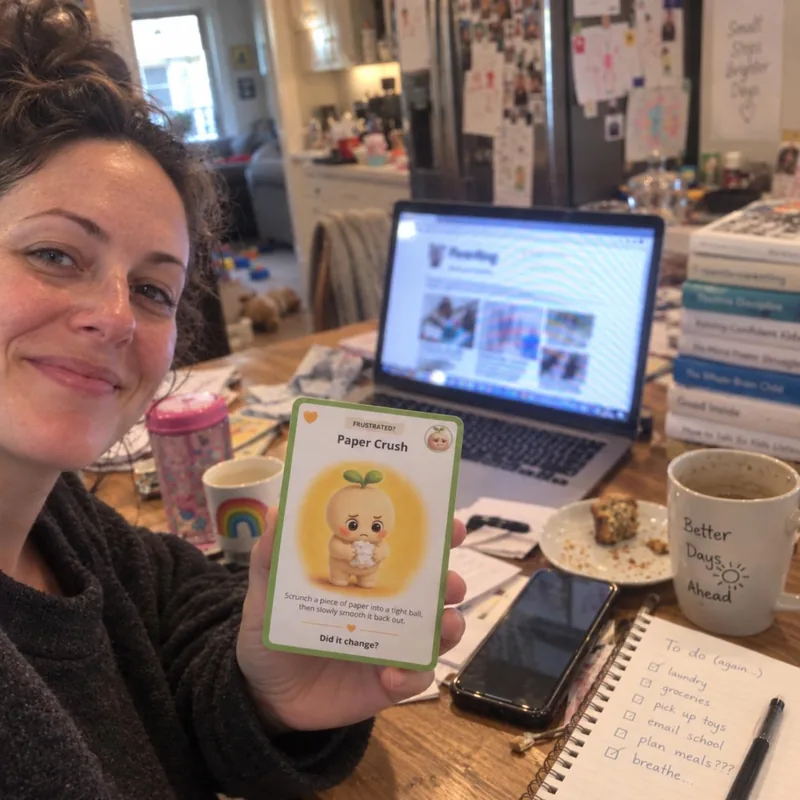
“The part that surprised me most was how much the parent prompts helped me. I bought this for my daughter, but I've caught myself using the wording on the cards to slow myself down too. It feels less like I'm correcting her and more like we're doing something together.”
“The visual and physical nature of the activities is useful for children who have difficulty engaging with verbal instructions when emotionally activated. I also like that the format is simple enough for caregivers to continue using at home without needing a lengthy explanation.”
“My son does not respond well to "take a deep breath." He usually gets more annoyed when I say it. The cards work better because there is something concrete for him to follow. He sees it more like a little activity than something I'm making him do.”
“I keep a few printed cards in my kitchen drawer because my grandchildren are here often. I've used them during arguments, before bedtime, and even when one of them was upset about losing a game. They are simple, quick, and easy to pull out when everyone is already frustrated.”
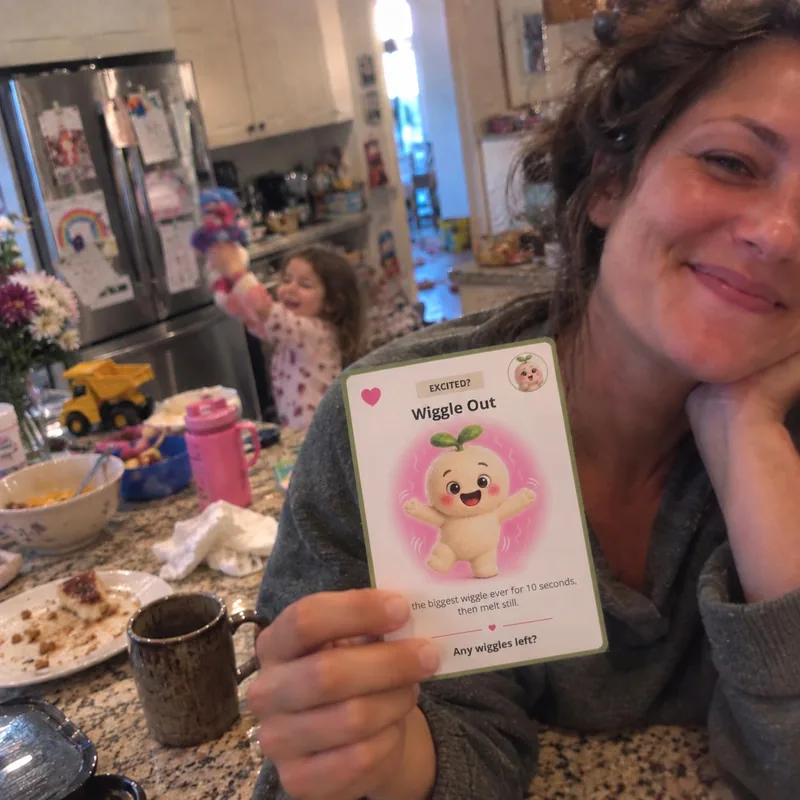
“We started using the cards when things were calm instead of waiting for a big meltdown. That made a huge difference for us. Now my daughter knows what they are and is much more willing to try one when she is frustrated.”
“These are especially helpful with younger children because they don't require a lot of language. Some children in my class cannot explain what they are feeling yet, but they can still copy a movement or follow a simple visual activity. That makes the cards very accessible.”
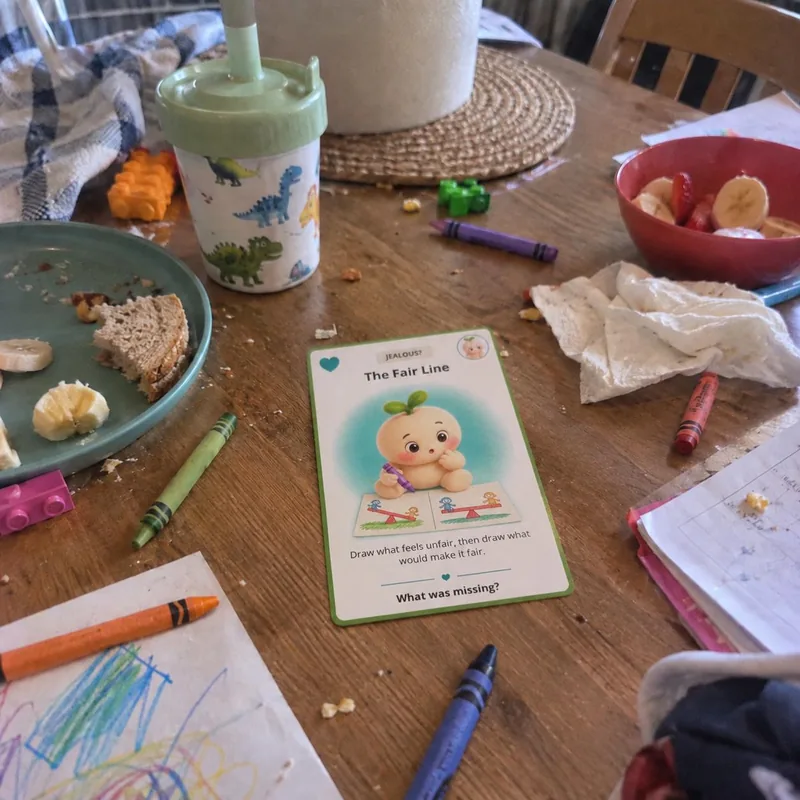
“My kids react very differently when they're upset, so I like having lots of different options. One prefers movement, the other likes quieter activities. I don't feel like I'm trying to force the same solution on both of them.”
“I like tools that are realistic for everyday family life, and this feels very usable. A caregiver can understand the idea quickly and apply it in a real moment without needing special materials or a long setup. That matters more than people realize.”
“We used one of the cards in the car last week when my son was getting really worked up because we had to leave the playground. I couldn't sit down and have a long conversation with him, so having something short and specific was exactly what I needed.”
“I'm not very good with apps or complicated digital products, so I was happy that this was straightforward. My daughter printed some of the cards for me and now I keep them at my house. My grandson even reminds me which one he likes.”
“I was worried my daughter might think the cards were too childish, but that hasn't been the case. She actually likes choosing one herself. Giving her that little bit of control seems to make her much more willing to participate.”
“I appreciate that the activities encourage regulation without demanding that the child immediately explain or justify their feelings. Sometimes children need a short physical reset before they are ready to talk. These cards fit nicely into that space.”
“At this age, my son cannot always tell me what is wrong. That is why I like the action-based cards so much. I can sit beside him and show him what to do without asking ten questions first.”
“I've found the ideas useful during those little moments that can easily turn into something bigger, like waiting, cleaning up, or moving from one activity to another. The activities are simple enough that children understand them quickly.”
“I expected to use this mostly for tantrums, but we actually use it more for smaller moments of frustration. That has probably been the biggest benefit. It helps us do something before the situation gets too big.”
“My granddaughter loves choosing the card herself. I think that is part of why it works so well for us. Instead of me telling her what she needs to do, she feels like she is part of the decision.”
“I like the variety of movement and body-based prompts. For some children, a simple physical action can be much easier to access than verbal reasoning in a stressful moment. The design also makes the activities approachable for families.”
“Honestly, I like that the activities are short. I've bought parenting resources before that looked great but were too complicated to actually use when I needed them. This one feels much more realistic for real life.”
“My daughter has a hard time when plans change unexpectedly. We've started using one or two cards during those moments and it gives her something to focus on while the frustration passes. It doesn't turn every situation into a perfect one, but it gives us a much better starting point.”
“What works for me is the simplicity. There is no long explanation to remember and no equipment to prepare. I can look at an activity and immediately understand how to use it with a child.”
“With three kids, I do not have time to create a perfect calming routine every time someone is upset. I needed something I could actually use in the middle of normal family chaos. That is exactly what these cards give me.”
“I originally thought these would mainly be for my youngest grandson, but his older sister often joins in too. It has become something they sometimes do together, which I did not expect at all.”
“The strength of this resource is that it translates emotional regulation into concrete actions. Families often understand the concept of calming down but struggle with what to actually do in the moment. These activities help bridge that gap in a very accessible way.”
“Bedtime is where we use these most. My son can go from completely fine to upset over something tiny when he's tired. Having one little activity to focus on before we keep talking has made bedtime feel less confrontational.”
“Children often respond better when they are invited to do something rather than being repeatedly told what not to do. I like that the cards give a clear, positive action they can follow. They are easy to adapt and don't interrupt the whole flow of the day.”
“As a therapist, I appreciate the simplicity. As a mom, I appreciate it even more. In real family life, you need tools that work when the kitchen is messy, dinner is late, and everyone is tired. These cards feel designed for those moments rather than for a perfect calm environment.”
Swipe or use the arrows to read more reviews
Meet Claire
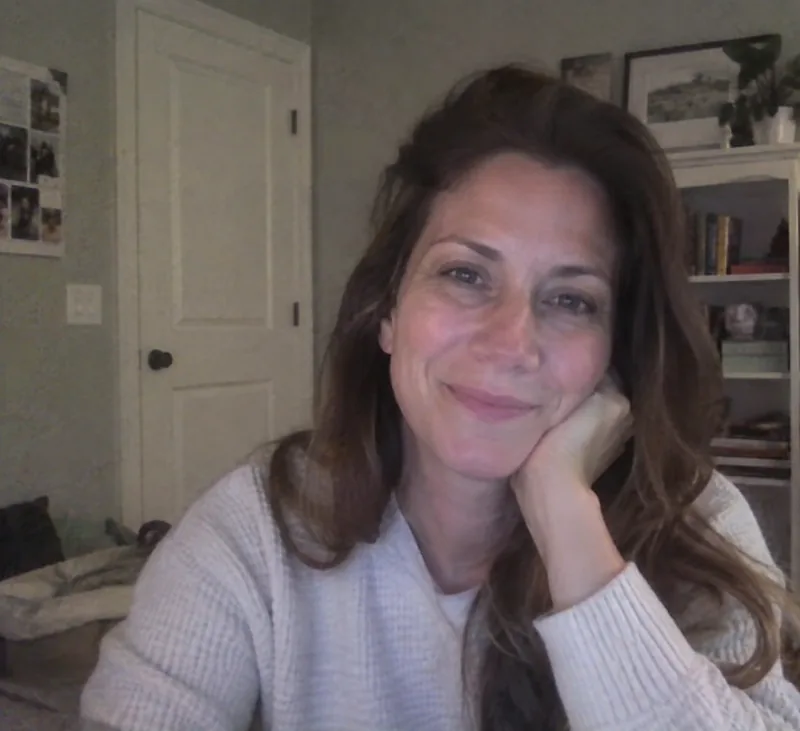
Hi, I'm Claire Bennett — a parent and the creator of ToviCalm.
I created ToviCalm because knowing you should stay calm is very different from actually doing it when everyone is tired, emotions are high, and your patience is running out.
I didn't want another parenting system built around getting every response right.
I wanted simple tools for the few seconds between feeling triggered and deciding what happens next.
Because sometimes you don't need to become a completely different parent.
You just need a little more space to pause, reset, and respond.
— Claire Bennett
Parent & Creator of ToviCalm
How this was made.

Every one of the 96 cards was written against a single question: could a parent actually use this while a child is screaming? Fifteen cards failed that test and were rebuilt, because they asked a child to picture something instead of do something. Nothing shipped until the answer was yes 96 times.
The fourth box on the back — the line for you — was the first thing designed and the last thing checked, on every card.
Instant download90-day guaranteeSecure checkout
Still unsure?
There's no method to learn and no chart to keep up. Pick a card, read one line, do one thing. It's built for the worst morning, not the calm ones.
There's a line for you on the back of all 96 cards, and one of the two included guides is written entirely for that.
No. It works from your phone. If you do print, you get three layouts and you can reprint whenever cards go missing or get sticky.
Three to ten. Younger children lean on the movement cards; older ones get more from the back of the card.
Yes, as-is. Body first, and 75 of 96 need no speech.
No. Pick a card and use it tonight. The guides are there when you want them.
Usually one of two things: the deck was introduced mid-crisis and now feels like a consequence, or the card is being handed down rather than chosen. Both are covered in the included guide. Children join what looks appealing far more reliably than what they're invited to.
No. If you only ever use the fronts, the deck still works. The backs are there for the second time you use a card, or for a calm evening.
No. One payment, files are yours, reprint them forever.
90 days, full refund, and you keep the deck. One email and it's done.
7:32am is coming either way.
There'll be another one — tomorrow, or Thursday, or out of nowhere in a supermarket. The only thing that changes is whether you're standing there with nothing, or reaching into your pocket.
90 days. If it doesn't help your family, email us and we refund you in full — and you keep the deck. Nothing to prove, nothing to send back.
Instant download90-day guaranteeSecure checkout
96 cards · 8 emotions · two guides · US$29.95